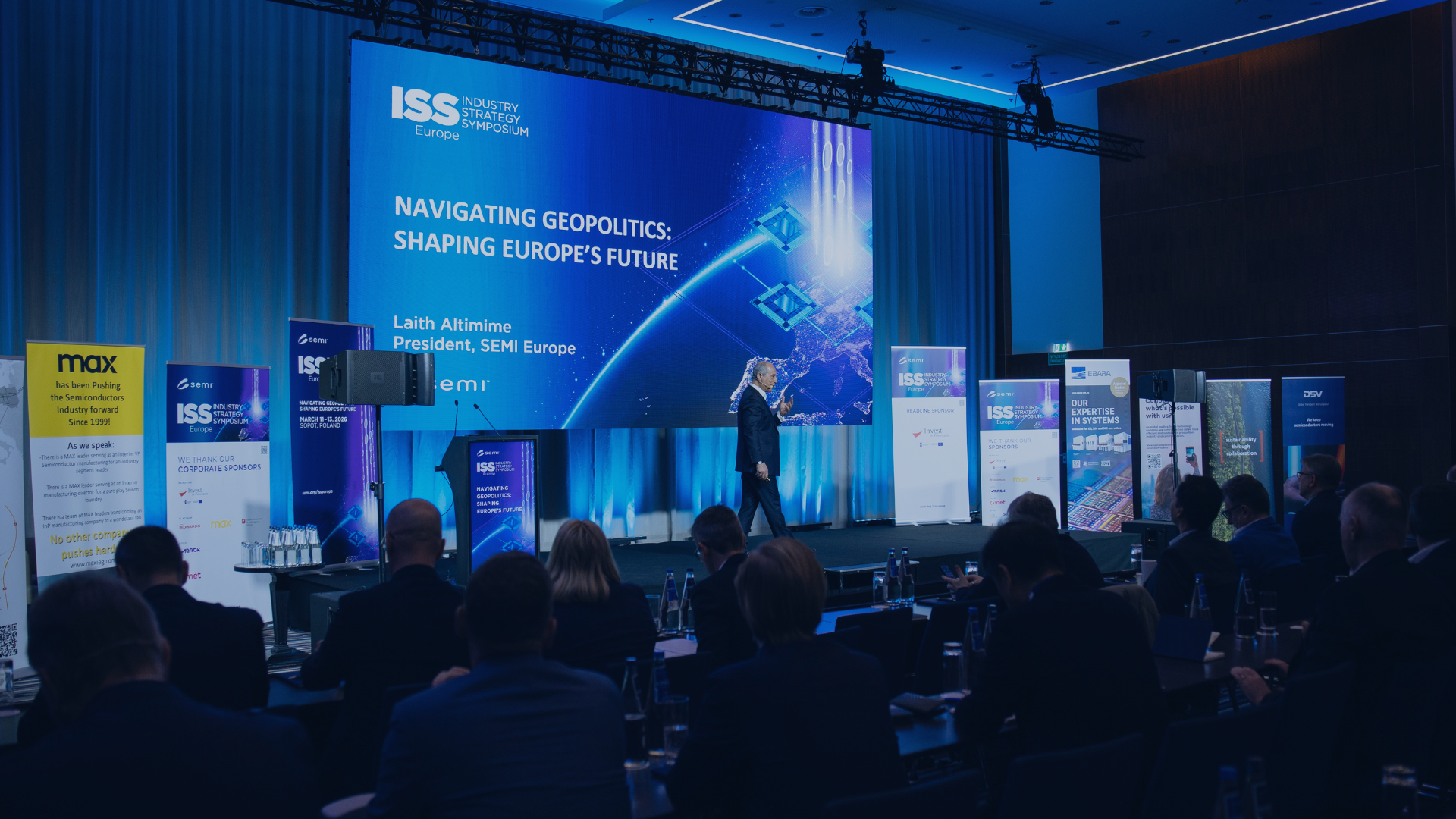
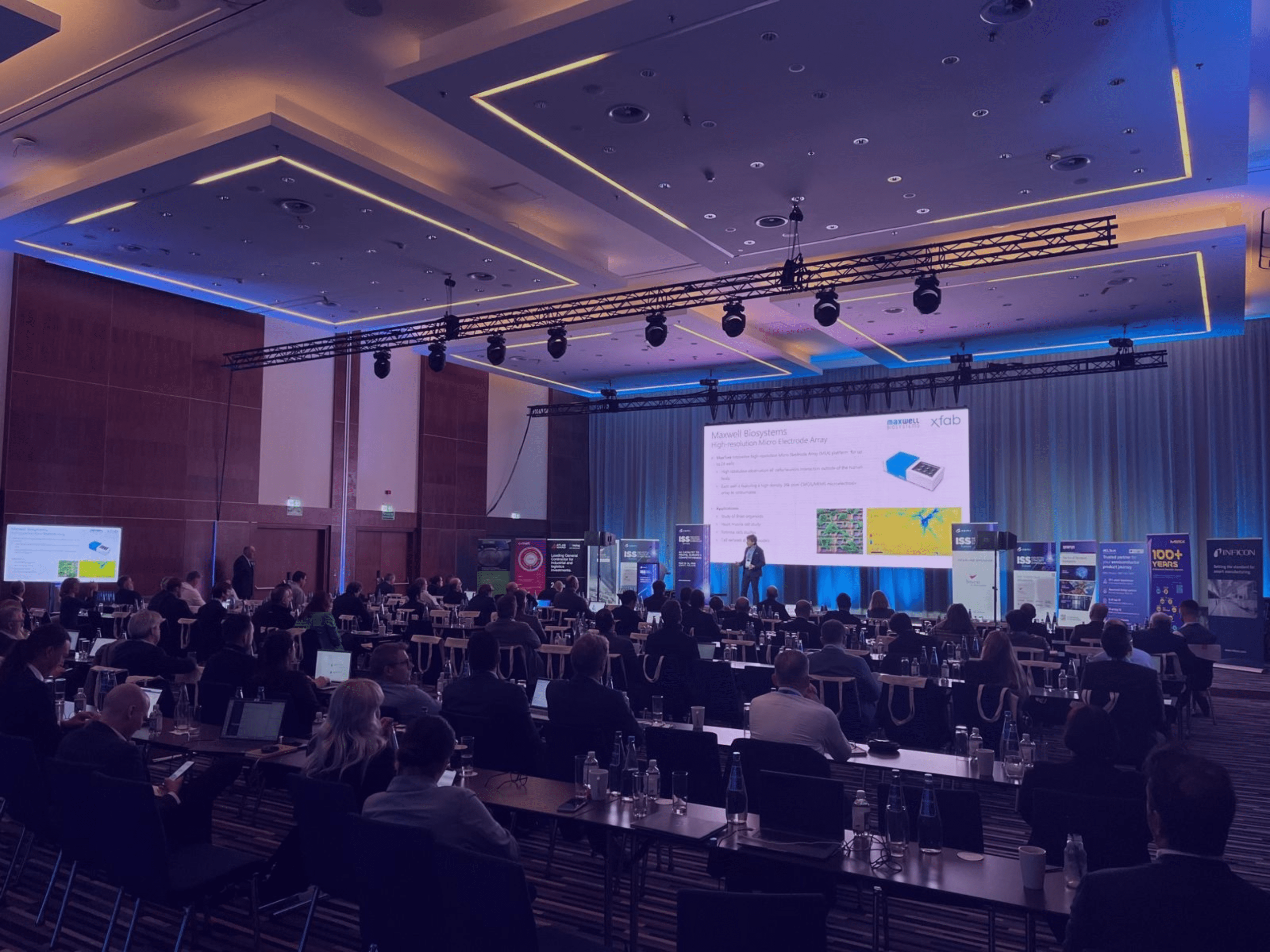
Europe is redefining its industrial map. As the European Chips Act begins to take shape, regions across the continent are competing not only for investment but also for technological sovereignty, energy security, and talent. Among the most dynamic players in this new landscape is Pomerania — the northern region of Poland, encompassing Gdańsk, Gdynia, and Sopot — which is rapidly positioning itself as a bridge between the Nordic technology triangle and Central European manufacturing powerhouses.
We spoke with Mikołaj Trunin, Deputy Director of Invest in Pomerania, about how the region is becoming Poland’s most active semiconductor hub, what it plans to showcase at Semicon Europa in Munich, and why energy, logistics, and collaboration are key to its success.
Europe is accelerating its semiconductor ambitions. Why has Pomerania become Poland’s most active region in this field?
Mikołaj Trunin:
Because we approach semiconductors as a strategic ecosystem, not just a single industry. Over the past two years, SK hynix, OpenChip, and MEP Solutions have all announced their semiconductor-related investments in Pomerania — the only region in Poland where such projects are taking shape.
We have the strongest talent base in the country, a coordinated regional strategy, and — most importantly — a shared commitment to building this sector. Through Invest in Pomerania, local authorities, municipalities, universities, and private investors work together under one unified brand: Pomerania. This cooperation model mirrors what Silicon Saxony has successfully built in Germany. In fact, earlier this year, we conducted a study visit to Dresden to exchange best practices, and we are now applying those lessons here in Northern Poland. That’s what makes Pomerania the country’s most dynamic and coordinated semiconductor region.
What will Invest in Pomerania focus on at Semicon Europe in Munich?
MT:
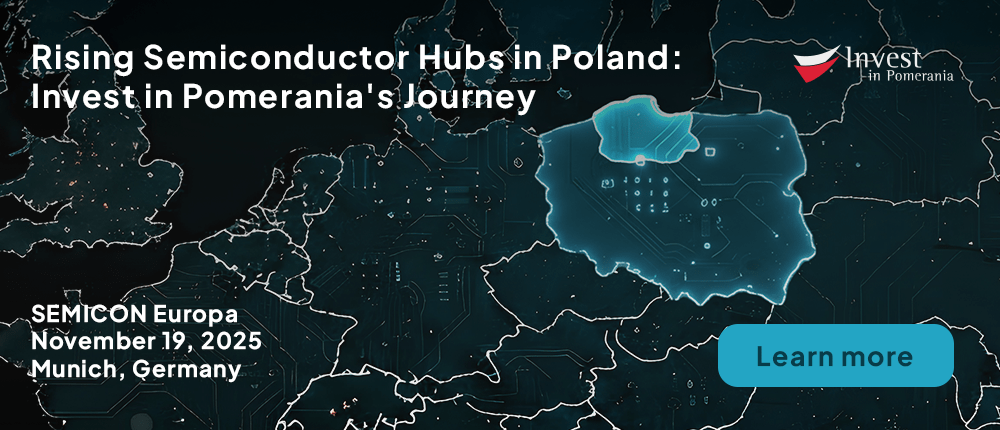
At Semicon Europa in Munich, we are going to lead the creation of a unified Pomeranian and Polish showcase — a full regional and national ecosystem under one brand of Invest in Pomerania. Together with universities, science and technology parks, and private companies, we will present Pomerania and Poland as a ready-to-invest semiconductor and mobility hub where advanced R&D, component manufacturing, logistics, and green energy come together.
Our mission is to show that northern Poland is already building Europe’s next semiconductor and mobility cluster, operating with the same collaborative mindset as Silicon Saxony — but powered by our own strengths: strong talent, clean energy, and strategic access to the Baltic Sea.
The region is often described as “port-centric.” How does this influence the development of high-tech sectors such as semiconductors?
MT:
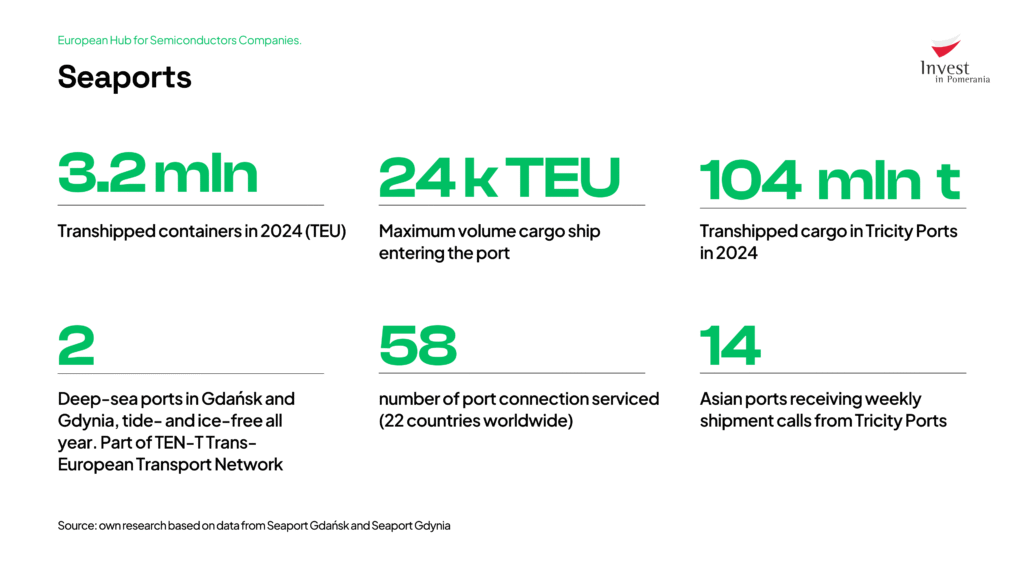
Our ports in Gdańsk and Gdynia are among the most advanced in the Baltic Sea basin and they give us a major competitive edge. They handle large-scale container and component logistics efficiently all year round, thanks to deep-water, ice-free terminals.
But for the semiconductor industry, it’s not only about sea logistics, it’s also about air cargo connections. Access to fast, secure air freight is essential for high-value, time-sensitive equipment and materials. Pomerania’s growing cargo network is a key factor in why semiconductor investors see the region as a strategic gateway to Northern and Western Europe.

Energy is becoming a decisive factor for energy-intensive industries like semiconductors. How is Pomerania preparing?
MT:
Energy is our long-term advantage. We are transforming from an importing region into a key producer and exporter of clean power. Offshore wind farms, photovoltaic projects, and Poland’s first nuclear power plant are all being developed here. Within a few years, Pomerania will be among Europe’s most energy-secure regions — and that’s a game changer for industries requiring stable, high-volume electricity supplies.
This shift effectively changes the energy map of Poland, and with it, the geography of industrial investment. Energy-intensive, technology-driven projects — including semiconductor manufacturing — will naturally locate where energy is both sustainable and available. That means here, in Pomerania.
Is there room for further industrial and semiconductor investments?
MT:
Yes — and we’re ready for them. We’ve secured over 500 hectares of fully serviced land in Pruszcz Gdański, dedicated to large-scale, high-tech investments. We have already signed an MoU with Taiwanese partners, opening the door for deeper cooperation in semiconductor manufacturing and supply chains.
But there’s still room for new investments and we’re actively seeking partners who share our long-term vision for Europe’s semiconductor resilience. The foundation is ready; now we’re looking for those who want to grow with us.
Beyond infrastructure, what factors make the region so effective in attracting high-tech projects?
MT:
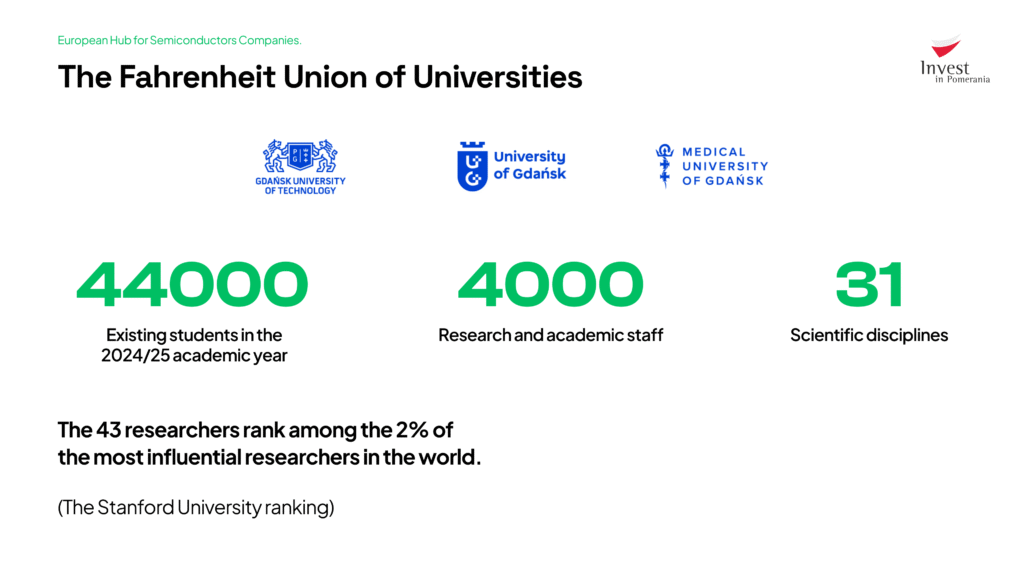
Human capital is absolutely fundamental. The Tricity metropolitan area — Gdańsk, Gdynia, and Sopot — has over 25 universities and research institutes producing top engineering talent. Our academic partnerships with the Gdańsk University of Technology, University of Gdańsk, and local technical colleges ensure that companies can co-develop tailored training and R&D programs.
Equally important is our collaboration culture. Through Invest in Pomerania, we bring together regional government, municipalities, universities, and private investors under one coordinated strategy. It’s not just about attracting projects — it’s about making sure they succeed and grow. That’s why companies like Lyten, Navblue, and Openchip decided to locate their operations here: they found not only infrastructure, but a long-term partner ecosystem that shares their ambitions.

How do you see the next decade for Pomerania in Europe’s technology landscape?
MT:
The next decade will be transformative. The European Chips Act, the Green Deal, and the global reconfiguration of supply chains are all converging — and regions like ours stand to benefit immensely. We have already proven our ability to attract and retain global leaders like Intel, or SK hynix, while nurturing startups and research spin-offs.
Our goal is to become Europe’s northern gateway for advanced technology, where semiconductor innovation meets mobility, clean energy, and digital transformation. The investments of today are laying the foundation for an ecosystem that will serve Europe’s technological sovereignty for decades to come.
As I often say: Europe’s future resilience will depend not only on its capitals but on the strength of its regions. And Pomerania is ready to take that responsibility — as both a partner and a pioneer.
Contact with Our Team
Invest in Pomerania


Head of Industrial Investment Projects
Radosław Bojarczuk
mobile: +48 500 351 619
email: radoslaw.bojarczuk@investinpomerania.pl

Real Estate Advisory Project Manager
Michalina Kaczor
mobile: +48 885 660 652
email: michalina.kaczor@investinpomerania.pl